


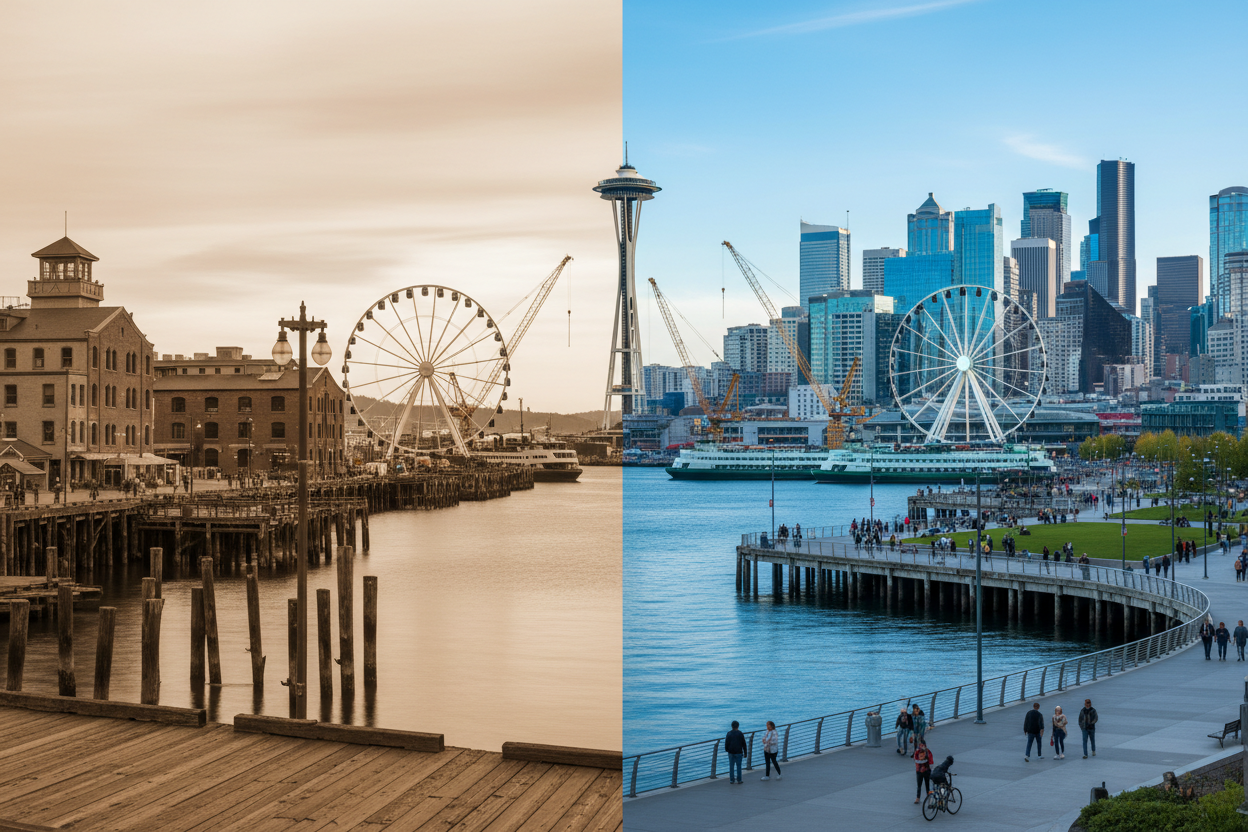
Seattle’s Waterfront Transformation: What’s New and What’s Coming
Seattle’s waterfront has been the heartbeat of the Emerald City for generations. From its early days as a bustling port to its current evolution into a world-class destination, the waterfront continues to capture the imagination of residents and visitors alike. The massive transformation happening along Elliott Bay represents one of the most ambitious urban renewal projects in Seattle’s history, promising to reshape how we experience this iconic stretch of coastline.
After decades of planning, construction, and anticipation, Seattle’s waterfront is emerging as a stunning example of how cities can reimagine their relationship with the water. The removal of the Alaskan Way Viaduct has opened up unprecedented opportunities to create something truly special – a waterfront that honors the past while embracing the future.

The Historic Context: From Industrial Hub to Urban Playground
Understanding Seattle’s waterfront transformation requires looking back at its rich history. For over a century, this stretch of land served primarily industrial purposes, with the elevated Alaskan Way Viaduct casting shadows over much of the area since 1953. The double-decker highway, while functional, created a physical and psychological barrier between downtown Seattle and its waterfront.
The 2001 Nisqually earthquake damaged the viaduct, sparking years of debate about its future. After extensive public input and planning, city leaders made the bold decision to remove the structure entirely rather than simply rebuild it. This choice set the stage for the comprehensive waterfront transformation we’re witnessing today.

The old waterfront, while charming in its own way, was fragmented and difficult to navigate. Tourists often found themselves confused by the maze of piers, while locals frequently avoided the area due to traffic congestion and limited accessibility. The transformation aims to address these longstanding issues while preserving the character that makes Seattle’s waterfront special.
What’s Already Complete: New Attractions and Improvements
The most visible change to Seattle’s waterfront is the stunning new waterfront park that has replaced portions of the old viaduct. This green space provides unobstructed views of Elliott Bay and the Olympic Mountains, something that was impossible when the highway dominated the landscape. The park features walking and biking paths, public art installations, and carefully designed gathering spaces that encourage people to linger and enjoy the surroundings.
Pike Place Market’s expansion and renovation have also breathed new life into the area. The market’s new MarketFront addition provides additional vendor space while offering spectacular water views. The expansion includes outdoor plazas and seating areas where visitors can enjoy fresh seafood while watching ferries cross the bay.
Transportation improvements have made the waterfront significantly more accessible. The new streetcar line connects various waterfront attractions, making it easier for visitors to explore without dealing with parking challenges. Enhanced pedestrian walkways and bike lanes have created safer, more pleasant ways to experience the area on foot or by bicycle.
Several piers have undergone major renovations, transforming them from tired tourist traps into genuine destinations. Pier 62 now features improved event spaces and better integration with the surrounding park areas. The Seattle Great Wheel, while not new, has become an even more prominent feature with improved sightlines and access.
Current Construction Projects Reshaping the Landscape
The waterfront transformation is far from complete, with several major construction projects currently underway. The most significant of these is the new waterfront park’s continued development. Additional phases will add more green space, public art, and recreational facilities. Construction crews are working to ensure seamless integration between new and existing elements while maintaining public access wherever possible.
The Ocean Pavilion represents another major undertaking currently in progress. This facility will serve as a gateway to the waterfront, providing visitor services, educational exhibits about Puget Sound’s marine environment, and event space for community gatherings. The building’s design emphasizes sustainability and connection to the water, featuring materials and architectural elements that reflect Seattle’s maritime heritage.
Infrastructure improvements continue behind the scenes as well. Utility upgrades, improved stormwater management systems, and enhanced emergency access routes are all part of the ongoing work. These less visible improvements will ensure the waterfront can handle increased visitor traffic while protecting the marine environment.
Several private development projects are also moving forward in coordination with the public improvements. New hotels, restaurants, and mixed-use buildings are being designed to complement the waterfront’s new character while providing economic benefits to the surrounding area.
Future Vision: What’s Coming Next
The long-term vision for Seattle’s waterfront extends well beyond the current construction timeline. Plans call for continued expansion of public spaces, with additional parks and recreational facilities planned for areas that are still under development. The goal is to create a continuous, accessible waterfront experience from Pioneer Square to Belltown.
Climate resilience features prominently in future planning. As sea levels rise and weather patterns change, the new waterfront is being designed to adapt and protect both people and property. This includes elevated walkways, improved drainage systems, and flexible spaces that can accommodate different water levels.
Technology integration will play an increasing role in the waterfront experience. Plans include interactive educational displays about marine life and Seattle’s history, improved wayfinding systems, and digital art installations that can change with the seasons or special events. These technological enhancements aim to educate and engage visitors while maintaining the natural beauty of the setting.
The aquarium expansion represents one of the most exciting future developments. Plans call for significantly increased exhibit space, improved research facilities, and enhanced educational programs. The expanded facility will strengthen Seattle’s role as a center for marine science and conservation while providing world-class attractions for visitors.
Economic Impact and Community Benefits
The waterfront transformation is generating significant economic benefits for Seattle and the broader region. Construction alone has created thousands of jobs, while the improved attractions are expected to draw millions of additional visitors annually. Local businesses are already seeing increased foot traffic, and property values in surrounding neighborhoods have risen substantially.
The project prioritizes local hiring and contracting wherever possible, ensuring that Seattle residents benefit directly from the investment. Workforce development programs connected to the construction have provided training opportunities for people entering the building trades.
Beyond tourism, the waterfront improvements are enhancing quality of life for Seattle residents. The new parks and recreational facilities provide much-needed green space in the urban core. Improved public transportation connections make it easier for people from all neighborhoods to access and enjoy the waterfront.
The transformation is also supporting Seattle’s reputation as an environmentally conscious city. Sustainable design principles, habitat restoration efforts, and educational components all contribute to broader conservation goals while demonstrating how urban development can work in harmony with natural systems.
Challenges and Lessons Learned
No project of this magnitude comes without challenges, and Seattle’s waterfront transformation has faced its share of obstacles. Construction delays, budget overruns, and coordination difficulties have tested the patience of both officials and the public. Weather conditions, particularly during winter months, have sometimes slowed progress and complicated logistics.
Balancing the needs of different stakeholders has required careful negotiation and compromise. Tourists, residents, businesses, and environmental groups all have different priorities and concerns. Finding solutions that satisfy everyone while maintaining the project’s overall vision has been an ongoing challenge.
The COVID-19 pandemic added unexpected complications, affecting both construction timelines and the economic assumptions underlying the project. However, the crisis also reinforced the importance of public spaces and outdoor recreation opportunities, validating the waterfront transformation’s emphasis on accessible, open-air attractions.
These challenges have provided valuable lessons for other cities undertaking similar projects. The importance of flexible planning, robust community engagement, and realistic timeline expectations has become clear throughout the process.
Conclusion: A New Chapter for Seattle’s Waterfront
Seattle’s waterfront transformation represents more than just urban renewal – it’s a reimagining of how a city can connect with its natural setting. The removal of the Alaskan Way Viaduct and the creation of new parks, attractions, and public spaces has already begun to change how residents and visitors experience this iconic part of the city.
While construction continues and some elements remain years away from completion, the progress made so far demonstrates the power of bold vision and persistent effort. The new waterfront honors Seattle’s maritime heritage while creating spaces that serve the needs of a modern, growing city.
As the transformation continues, Seattle’s waterfront is poised to become a model for other coastal cities facing similar challenges. The integration of environmental sustainability, economic development, and community needs provides a template for urban waterfront development in the 21st century.
For those planning to visit or residents eager to explore, the waterfront offers something new to discover with each passing month. The ongoing transformation ensures that Seattle’s relationship with Elliott Bay will continue evolving, creating new memories and experiences for generations to come. The best is yet to come for this remarkable stretch of Seattle’s shoreline.


