


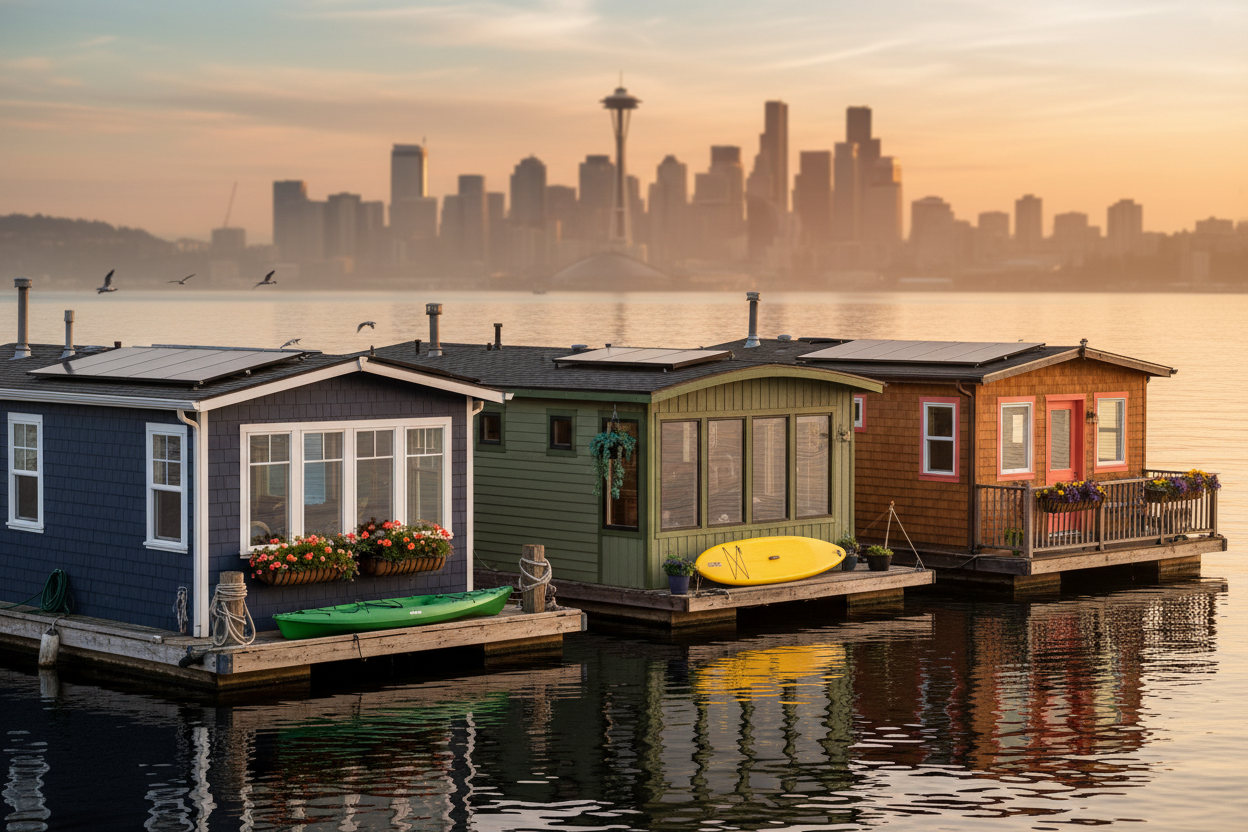
Living on the Water: A Tour of Seattle’s Iconic Houseboats
Imagine waking up to the gentle lapping of water against your home, watching seaplanes taxi past your window, and stepping out onto your deck to feed the neighborhood seals. This isn’t a vacation fantasy – it’s daily life for the residents of Seattle’s floating neighborhoods. Seattle’s houseboats represent one of the city’s most unique and cherished living experiences, offering a glimpse into a lifestyle that seamlessly blends urban convenience with waterfront tranquility.
These floating homes have captured imaginations for decades, most famously serving as the backdrop for the romantic comedy “Sleepless in Seattle.” But beyond Hollywood glamour, Seattle’s houseboat communities tell a fascinating story of innovation, community spirit, and the human desire to live in harmony with nature. From Lake Union’s bustling floating neighborhoods to the quieter enclaves of Portage Bay, these aquatic residences offer visitors and potential residents alike a chance to explore what it truly means to live on the water.

The Rich History of Seattle’s Floating Communities
Seattle’s houseboat tradition stretches back over a century, born from necessity and nurtured by the city’s unique geography. In the early 1900s, as Seattle’s population boomed during the Klondike Gold Rush, affordable housing became scarce. Enterprising residents began converting old boats and building simple floating structures on the city’s numerous waterways, creating an alternative housing solution that was both practical and affordable.
The original floating communities were far from the picturesque neighborhoods we see today. Many early houseboats were little more than shacks on logs, housing dock workers, fishermen, and others who needed to live close to the water for their livelihoods. These communities often lacked basic amenities like running water and electricity, yet they fostered a strong sense of camaraderie among residents who shared the challenges and joys of waterfront living.

The transformation of Seattle’s houseboat communities accelerated in the 1960s and 1970s, as artists, writers, and free spirits discovered the unique charm of floating homes. This cultural shift brought new energy and creativity to the waterways, with residents investing in improvements and establishing the strong community bonds that characterize these neighborhoods today.
Lake Union: The Heart of Seattle’s Houseboat Scene
Lake Union serves as the crown jewel of Seattle’s floating neighborhoods, home to the largest concentration of houseboats in the Pacific Northwest. This urban lake, nestled between the neighborhoods of South Lake Union, Fremont, and Eastlake, provides the perfect setting for waterfront living with all the conveniences of city life just steps away.
The houseboats along Lake Union’s eastern shore present a delightful variety of architectural styles and personalities. You’ll find everything from modest floating cottages that have housed the same families for generations to stunning modern designs that could grace the pages of architectural magazines. Many homes feature expansive decks perfect for entertaining, while others prioritize privacy with carefully planned landscaping and strategic positioning.
What makes Lake Union particularly special is its accessibility to visitors. The Burke-Gilman Trail runs along the northern shore, offering walkers and cyclists excellent views of the floating neighborhoods. During summer months, kayakers and paddleboarders often cruise slowly past the houseboats, creating a peaceful aquatic parade that residents have come to embrace as part of their daily rhythm.
The lake’s central location also means residents enjoy easy access to Seattle’s cultural attractions. The Museum of Flight, various waterfront parks, and the bustling South Lake Union district are all within easy reach, making it possible to enjoy the serenity of water living without sacrificing urban amenities.
Portage Bay and Beyond: Exploring Other Floating Neighborhoods
While Lake Union gets most of the attention, Seattle’s other waterways host equally charming houseboat communities. Portage Bay, connecting Lake Union to Lake Washington, offers a more intimate setting with fewer but equally impressive floating homes. The houseboats here tend to be larger and more secluded, appealing to residents who prefer privacy while still maintaining easy access to the city.
The Ship Canal, which connects Puget Sound to Lake Washington, provides another unique setting for floating homes. These houseboats experience more water traffic as boats navigate between the sound and the lakes, creating a dynamic environment where residents become accustomed to the constant ballet of pleasure craft, commercial vessels, and the occasional visiting yacht.
Each of these smaller communities has developed its own character and traditions. Some organize regular potluck dinners where neighbors gather to share meals and stories. Others host seasonal celebrations, like summer solstice parties or holiday light displays that transform the waterways into magical wonderlands.
Architectural Marvels: The Design Evolution of Seattle Houseboats
Modern Seattle houseboats represent a fascinating evolution in waterfront architecture, blending practical considerations with creative design solutions. Unlike their humble predecessors, today’s floating homes often showcase innovative engineering and stunning aesthetics that maximize both living space and connection to the water.
Contemporary houseboat design must address unique challenges that land-based homes never face. Architects and builders must consider factors like water level fluctuations, wind resistance, and the constant movement that comes with floating foundations. Many newer houseboats feature flexible connection systems that allow the structure to move naturally with the water while maintaining stability and comfort for residents.
The most striking houseboats often feature floor-to-ceiling windows that blur the line between indoor and outdoor living. These expansive glass walls provide residents with panoramic water views while flooding interior spaces with natural light that reflects off the water’s surface throughout the day. Some homes incorporate multiple levels connected by spiral staircases, creating vertical living spaces that maximize square footage on relatively small floating platforms.
Sustainability has become increasingly important in modern houseboat design. Many newer homes incorporate solar panels, rainwater collection systems, and composting toilets. Some residents have created floating gardens using innovative hydroponic systems, while others maintain traditional container gardens on their decks and rooftops.
The Daily Reality of Houseboat Living
Living on a houseboat requires a different mindset and lifestyle adjustments that many land-dwellers never consider. Residents must become comfortable with the constant, subtle movement of their homes as they respond to wind, waves, and passing boat traffic. This gentle motion becomes second nature over time, with many residents reporting that they sleep better on the water than they ever did on land.
Practical considerations play a significant role in daily life. Most houseboats rely on shore connections for electricity and fresh water, while waste management requires pumping systems that transport sewage to municipal treatment facilities. Internet and cable services require special waterproof connections, and residents often need to coordinate with neighbors when service technicians need dock access.
Weather takes on new significance for houseboat residents. Winter storms can create challenging conditions, with high winds and waves testing both the structural integrity of homes and the nerves of their occupants. However, many residents find these dramatic weather events exhilarating rather than frightening, appreciating the front-row seat to nature’s power that their waterfront location provides.
The social aspects of houseboat living often surprise newcomers. The close proximity of homes and shared dock spaces naturally foster community connections. Neighbors frequently help each other with everything from accepting packages to emergency situations, creating bonds that extend far beyond typical residential relationships.
Visiting Seattle’s Houseboat Communities
For visitors interested in exploring Seattle’s floating neighborhoods, several options provide respectful ways to experience these unique communities. Walking tours along the waterfront offer excellent viewing opportunities while maintaining appropriate distance from private residences. The best vantage points include the Burke-Gilman Trail along Lake Union’s north shore and various public parks that border the waterways.
Water-based tours provide a different perspective, allowing visitors to see the houseboats from the water level that residents experience daily. Kayak rentals are available from several locations around Lake Union, and guided tours often include interesting historical information about the communities and their development over time.
Photography enthusiasts will find endless inspiration in the diverse architectural styles and picturesque settings. However, visitors should remember that these are private homes, and residents appreciate respectful behavior that protects their privacy while allowing others to enjoy the beauty of their neighborhoods.
Some houseboats occasionally participate in special events like the annual Floating Homes Tour, which provides rare opportunities to see the interiors of these unique residences. These events typically support local charities while satisfying public curiosity about life on the water.
The Future of Seattle’s Floating Communities
Seattle’s houseboat communities face both opportunities and challenges as the city continues to grow and evolve. Rising property values have made floating homes increasingly expensive, potentially changing the character of communities that have traditionally attracted artists, writers, and others drawn more by lifestyle than luxury.
Environmental considerations also play an increasingly important role in the future of these communities. Climate change and its effects on water levels, storm intensity, and ecosystem health require ongoing adaptation and planning. Many houseboat communities are proactively addressing these challenges through improved waste management systems, sustainable design practices, and active participation in waterway conservation efforts.
Regulatory changes continue to shape the development and maintenance of floating home communities. City planners must balance the desire to preserve these unique neighborhoods with broader urban development needs and environmental protection requirements.
Conclusion: The Enduring Appeal of Life on the Water
Seattle’s houseboat communities represent more than just an alternative housing option – they embody a different way of thinking about home, community, and our relationship with the natural world. These floating neighborhoods have survived and thrived for over a century, adapting to changing times while maintaining their essential character and appeal.
Whether you’re considering the houseboat lifestyle yourself or simply curious about these unique communities, Seattle’s floating homes offer valuable insights into sustainable living, community building, and the human capacity for innovation. They remind us that home doesn’t always need solid ground beneath it – sometimes the most solid foundation is the community of neighbors who share your dock and the natural beauty that surrounds you every day.
For visitors to Seattle, taking time to explore these waterfront communities provides a deeper understanding of the city’s character and the creative spirit that has always defined the Pacific Northwest. The houseboats stand as floating testaments to the idea that with imagination, community spirit, and respect for the environment, we can create homes that enhance rather than diminish the natural beauty around us.


